
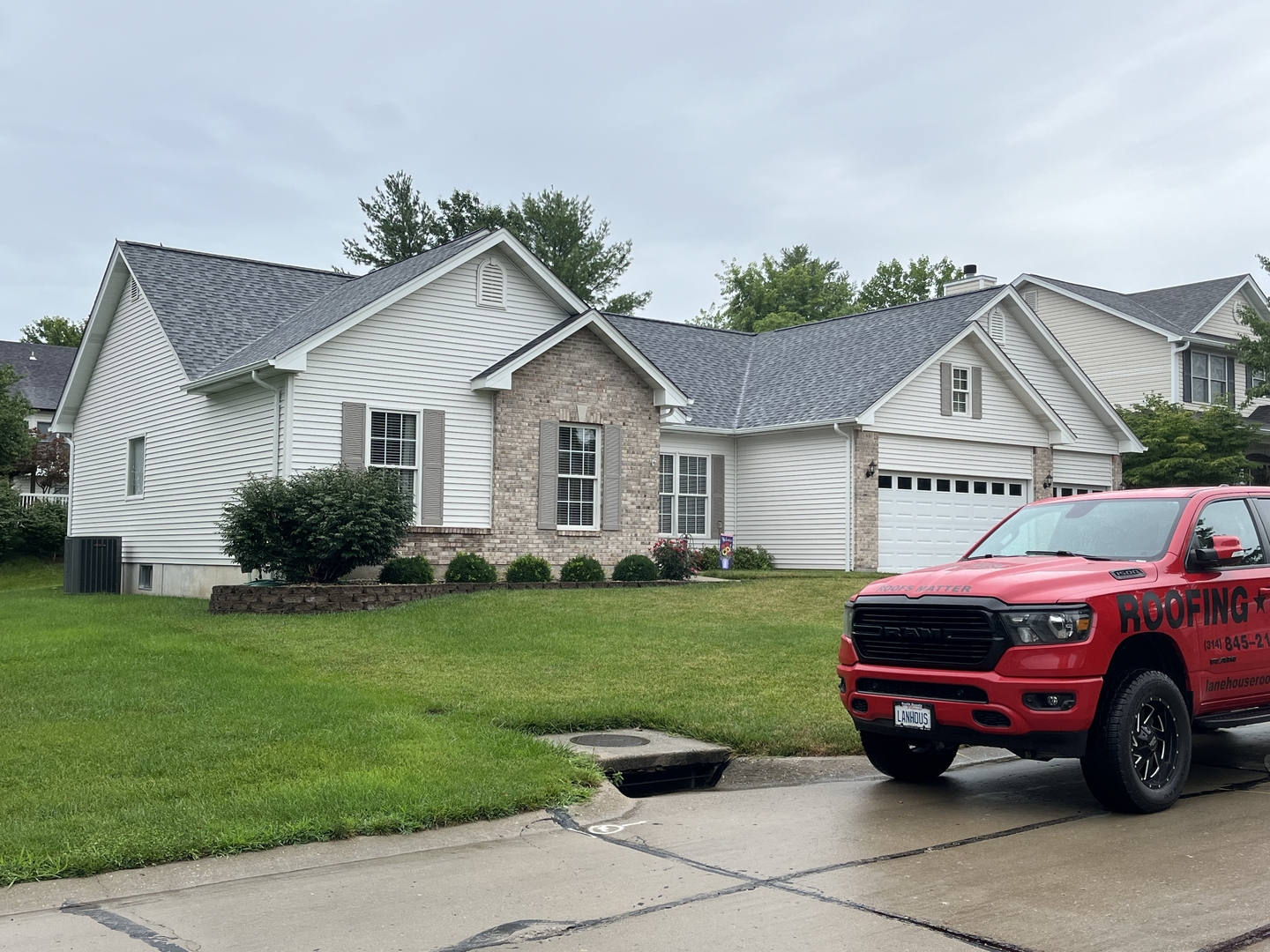
Roof Replacement in Winter: Cold-Weather Roofing in St. Louis
Updated August 26, 2026 | Lane House Roofing & Exteriors, St. Louis, MO
Direct Answer
Yes, you can replace a roof in winter in St. Louis. Asphalt shingles install best at 40°F and above, and St. Louis winters regularly provide workable windows. Cold-weather installs demand specific techniques, including warm shingle storage and hand-sealing, so contractor experience matters more in winter than any other season.
TL;DR
- Winter roof replacement in St. Louis is possible and routine when crews use cold-weather methods
- 40°F is the working threshold for asphalt shingle installation; St. Louis January highs average about 41°F
- Hand-sealing and warm shingle storage keep cold installs wind-resistant until spring sun activates the factory seal
- The off-season brings the fastest scheduling of the year and sometimes pricing flexibility worth asking about
- Leaks and ice dams compound through winter; waiting until spring usually costs more, not less
- Your roof’s condition, not the calendar, should drive the timing decision
One liner: A properly executed winter roof replacement in St. Louis performs the same as a summer one, and gets on the calendar faster.
Key Numbers
| Figure | Value | Source |
| Minimum recommended shingle install temperature | 40°F | GAF, 2025 [1] |
| Ideal asphalt shingle install range | 40 to 85°F | IKO, 2026 [2] |
| St. Louis January average high | About 41°F | NWS and Weather Spark, accessed 2026 [3] |
| Recommended pre-install shingle storage | 70°F for 24 hours | GAF, 2025 [1] |
| Ice and water shield extent at eaves | At least 24 inches past the exterior wall line | Common code practice, accessed 2026 [6] |
| Typical Lane House replacement duration | 1 to 3 days | Lane House Roofing & Exteriors, 2026 |
Can You Replace a Roof in Winter in St. Louis?
In short: Yes. Winter roof replacement is routine in St. Louis when crews schedule around weather and use cold-weather technique.
Yes. Roof replacement in winter in St. Louis is not only possible, it happens all season long. The catch is that cold-weather roofing demands techniques a summer install doesn’t, so the answer depends less on the calendar and more on who’s on your roof.
Here’s what surprises most homeowners: St. Louis winters cooperate more than you’d think. January is our coldest month, and even then the average high sits near 41°F, right at the working threshold for asphalt shingle installation [3]. Cold snaps come, but so do mild stretches in the 40s and 50s. Since most residential roof replacements in St. Louis finish in one to three days, a crew doesn’t need a warm month. It needs a short window of dry, workable weather, and our winters serve those up regularly between fronts.
Picture the common scenario. A homeowner in Affton spots a spreading ceiling stain the week before Christmas. The first instinct is to tarp it and white-knuckle it until April. That instinct is usually wrong. A leak that starts in December has three more months of freeze-thaw cycles, snowmelt, and ice ahead of it, and water damage compounds while you wait. Meanwhile, roofing crews that stay busy May through October often have open calendars in January.
Think of it like pouring concrete in winter. Contractors do it every day, but only because they adjust the process for the cold. Roofing works the same way. Done with the right cold-weather methods, a January roof performs the same as a June roof. Done carelessly, it fails early. The rest of this guide covers exactly what “done right” means, starting with the temperature limits themselves.
How Cold Is Too Cold? Shingle Temperature Limits Explained
In short: 40°F is the working threshold. Below it, shingles stiffen and the self-seal adhesive waits for warmth, so technique fills the gap.
The number that matters is 40°F. Below that, asphalt shingles lose flexibility, which makes them prone to cracking when they’re bent, cut, or nailed [1]. Manufacturers and industry references put the ideal installation range at roughly 40 to 85°F [2]. That doesn’t make 35°F a hard stop. It makes it a condition that changes how the work gets done.
| Temperature | What it means for installation |
| Above 40°F and dry | Standard installation, shingles handle and seal normally |
| Roughly 25 to 40°F | Workable with cold-weather technique: warm storage, careful handling, hand-sealing |
| Below 25°F, or snow and ice on the deck | Most crews reschedule; the deck must be clean and dry before work starts |
The reason temperature matters comes down to a strip of adhesive you’ll never see. Every asphalt shingle carries a self-sealing strip, a line of heat-activated glue that bonds each shingle to the course below it. In plain English, the sun welds your roof together. That bond is what gives shingles their wind resistance. In warm weather it happens within days. In cold weather it waits [2].
And “waits” is the key word, because here’s the myth worth killing: cold-installed shingles aren’t unsealed forever. They either get hand-sealed by the crew with roofing cement, or they bond on their own during the first sustained warm spell, often in early spring [2]. North-facing slopes take the longest since they see the least sun, which is why a careful contractor pays extra attention there [4].
Two more notes for the careful reader. Shingle mat technology has improved over the years, and some modern products tolerate colder installs than the old rules assumed, though 40°F remains the safe planning number [8]. And until shingles seal, wind can push debris underneath them, which is one more reason crews hand-seal rather than hope [4].
So a January install in St. Louis isn’t a compromise by definition. On a 42-degree afternoon, it’s a normal install. On a 30-degree morning, it’s a technique problem, and technique is exactly what the next section covers.
What Good Contractors Do Differently in Cold Weather
In short: Warm storage, hand-sealing, a dry deck, gentle handling, and adjusted nailing separate a lasting winter install from a failed one.
Winter roofing isn’t harder because the shingles change. It’s harder because the margin for sloppiness disappears. The techniques below separate a cold-weather install that lasts 25 years from one that sheds shingles in the first March windstorm.
Warm storage and small batches. Shingles that sit outside overnight turn stiff and brittle. Manufacturers recommend storing bundles in a heated space, around 70°F for at least 24 hours before installation, then bringing them up in small batches so they don’t chill on the roof [1]. A pallet of bundles dropped in your driveway three days early, in January, is a warning sign.
Hand-sealing. When temperatures stay below the sealing threshold, careful crews apply small dabs of asphalt roofing cement under each shingle. Those dabs hold the shingles against wind until the sun activates the factory seal in spring. Dosage is a genuine skill: quarter-sized dabs work, while over-applying causes shingles to blister [5].
A clean, dry deck. Snow, frost, and ice must come off the roof deck completely before underlayment goes down [1]. No exceptions. Trapped moisture becomes trapped rot. Winter-rated underlayment matters here too, since standard warm-weather rolls can buckle when applied in cold [2].
Gentle handling. Cold shingles crack when they’re thrown, dropped, or bent around ridges [2]. Overhandled cold shingles also shed granules, wear that may not show until months later [9]. Crews slow down, cut carefully, and treat bundles like they’re fragile, because in January they are.
Adjusted fastening. Cold air changes nail gun pressure, which leads to over-driven or under-driven nails. Good crews recalibrate through the day or switch to hand-nailing [2].
Manufacturer-spec everything. Installing to spec is what keeps your warranty valid in any season. As an Owens Corning Preferred Contractor, Lane House follows OC’s installation standards on every roof replacement in St. Louis, winter included.
One more tell worth knowing: a crew that shows up, checks the deck, and postpones for weather is protecting your roof. The one that pushes through a snowy morning to keep the schedule is protecting theirs.
The Off-Season Advantage: Scheduling and Savings
In short: The dependable winter advantage is speed to install. Discounts are worth asking about, never counting on.
Search for “winter roofing discount in St. Louis” and you’ll find plenty of promises. Here’s the honest version.
The guaranteed advantage of winter is the calendar. Roofing demand in the St. Louis metro peaks after spring and summer storm seasons, when hail claims flood in and every contractor’s schedule fills for weeks. Call in late May after a hailstorm and you’ll wait for an estimate, then wait again for an install date. Call in January and the whole timeline compresses. Estimates come faster. Install dates open within the next stretch of workable weather. Your project gets a crew’s full attention instead of a slot in a storm-season conveyor belt.
The possible advantage is price. Some contractors flex on pricing in the off-season because keeping experienced crews working through winter matters more than maximizing margin on any single job. That’s a reasonable thing to ask about directly: “Do you offer any seasonal flexibility on this quote?” What you shouldn’t expect is a fire sale. Quality contractors price for materials and skilled labor in any month, and a winter quote that looks too good usually means corners you’ll find later.
There’s also a quieter financial angle. Booking a winter replacement locks your price before spring, when material costs tend to reset and demand pushes quotes upward. If your roof will need replacing by summer anyway, buying in January is buying at the calm end of the market.
Lane House keeps the barriers low year-round: estimates are free, financing covers 100% of the project if you need it, and you don’t pay until the work is finished. If you want a number to compare against spring, request a free estimate and you’ll have it in hand either way.
When Winter Won’t Wait: Leaks, Ice Dams, and Storm Damage
In short: Active leaks and ice dams compound through winter. Waiting for spring is usually the most expensive option.
Some winter roof problems can sit until spring. The ones in this section can’t.
Start with the postcard icicles. That thick ridge of ice hanging off an Oakville eave looks festive, but it’s often the visible edge of an ice dam. The mechanics take three sentences: heat escaping your attic melts the snow on the upper roof. The meltwater runs down until it hits the cold overhang at the eaves, where it refreezes. The ice builds into a dam, and the water pooling behind it backs up underneath your shingles, which were never designed to hold standing water.
Once water is under the shingles, the clock starts. A leak that shows up as a faint ceiling stain in December becomes wet insulation by January, softened roof decking by February, and a possible mold problem by the time spring estimates start. Each stage costs more than the one before it, and none of it reverses on its own. “Wait until spring” is often the most expensive option on the table.
Ice dams are also a symptom, not the disease. The disease is a roof system losing the fight against heat and moisture: thin attic insulation, blocked ventilation, aging shingles, and eaves without proper protection. A modern replacement addresses all of it at once. Ice and water shield membrane goes down along the eaves, extending at least 24 inches past the exterior wall line, so backed-up water can’t reach the decking [6]. Ventilation gets corrected so the attic stays cold and the snow stops melting unevenly. Failing gutters, which trap water and feed the dam, get resolved through gutter replacement alongside the roof.
If your roof is showing ice dam damage, widespread leaking, or saturated decking, especially on shingles 15 years or older, you’re past patch territory. That’s a replacement conversation, and winter is a fine time to have it.
Winter vs. Spring: Should You Wait?
In short: Every season has a catch. Your roof’s condition should drive timing more than the calendar.
Here’s the framework, then the honest verdict.
| Season | Working conditions | Scheduling | The catch |
| Winter | Workable on dry days near or above 40°F; cold-weather technique required | Fastest estimates and install dates of the year | Weather delays possible; sealing may wait for spring warmth |
| Spring | Mild temps are ideal for shingles | Fills fast once storm season starts | Hail claims create metro-wide backlogs |
| Summer | Long dry stretches | Busy | Above roughly 85°F shingles soften, scuff underfoot, and get harder to install cleanly [7] |
| Fall | The traditional sweet spot: mild and dry | The most crowded calendar of the year | Everyone else read the same advice |
Two things jump out. First, there’s no free season. Fall has the best weather and the worst waitlists. Summer trades cold problems for heat problems. Spring is lovely right up until the first hailstorm. Winter asks for technique and flexibility but gives you the calendar to yourself.
Second, the table is answering the wrong question for a lot of readers. The season is a tiebreaker. The condition of your roof is the decision. Picture two neighbors in Webster Groves. One has a 20-year-old roof that’s tired but dry, books an April replacement, and does great. The other has the same roof with an active leak, decides to wait for that same April date, and spends the winter feeding water into her attic. Same plan, different roofs, opposite outcomes.
So the verdict runs like this. If your roof is healthy and you’re purely optimizing for comfort, aim for late spring through fall and book early. If your roof is damaged, leaking, or coming off an ice dam winter, the best time to replace it is before the damage compounds, and in St. Louis, a one-to-three-day install fits inside a winter weather window more often than most homeowners assume.
How Lane House Handles Winter Installs in St. Louis
In short: Lane House installs year-round to Owens Corning specs, with free estimates and no payment until the job is done.
Ask us whether we install roofs in winter and you’ll get the same answer we’ve given homeowners for years: absolutely. We’d take a mild June week over an icy January one like anyone would, but roofs don’t fail on a convenient schedule, and our crews work year-round because St. Louis homeowners need them to.
Everything in the section above is standard practice here. We watch the forecast and schedule installs into workable windows. We check the deck before work starts, and if a morning brings frost or snow, we clear it or we wait, because a dry deck matters more than a tidy calendar. Materials stay warm until they’re needed. And as an Owens Corning Preferred Contractor, we install to OC’s specifications in every season, which is what keeps your manufacturer warranty solid whether the job happens in January or July.
The trust part is simple to verify. We’ve served the St. Louis metro for more than 20 years from our South County headquarters on Lemay Ferry Road, we hold an A+ rating with the Better Business Bureau, and most of our replacements finish in one to three days, from Mehlville and Oakville to Affton, Fenton, and the Metro East.
If your roof is leaking, shedding shingles, or coming out of this winter with ice dam scars, don’t budget three more months of damage while you wait for spring. Request a free estimate or call (314) 845-2166. Estimates cost nothing, financing can cover 100% of the project, and you don’t pay until the work is done. Get a number now and you’ll have a locked plan before spring storm season resets every roofer’s calendar in the metro.
Frequently Asked Questions
Can you replace a roof in winter in St. Louis?
Yes. Roof replacement happens all winter in St. Louis. Crews schedule installs into dry weather windows near or above 40 degrees F and use cold-weather techniques such as warm shingle storage and hand-sealing. St. Louis January highs average about 41 degrees F, so workable days come regularly.
How cold is too cold to install shingles?
The industry guideline is 40 degrees F. Below that, asphalt shingles stiffen and can crack during handling, so crews either work with cold-weather technique or reschedule. Most contractors postpone when temperatures sit well below freezing or when snow and ice cover the roof deck.
Will shingles seal in cold weather?
Not immediately. The self-sealing strip on asphalt shingles activates with heat from the sun. In cold weather, crews hand-seal shingles with small dabs of roofing cement for wind resistance, and the factory seal finishes bonding during the first sustained warm spell, often in early spring.
Is winter a good time to replace a roof in St. Louis?
It can be. Winter offers the fastest scheduling of the year and sometimes pricing flexibility, while a proper cold-weather install performs the same as a summer one. If your roof is damaged or leaking, winter replacement usually costs less than letting the damage compound until spring.
Do roofers offer winter discounts in St. Louis?
Sometimes. Some contractors flex on price in the off-season to keep crews working, so it is worth asking about seasonal flexibility directly. The more dependable winter advantages are faster estimates, quicker install dates, and locking your price before spring demand pushes quotes upward.
What happens if it snows during my roof replacement?
Work pauses. The roof deck must be clean and dry before installation continues, so crews clear snow and frost or wait for it to melt. Your home stays protected in the meantime because tear-off is staged so exposed sections are covered before weather arrives.
Is a winter roof replacement covered by warranty?
Yes, when it is installed to the manufacturer’s specifications. Temperature alone does not void a shingle warranty. Installation shortcuts do, which is why hiring a contractor certified by the manufacturer, such as an Owens Corning Preferred Contractor, matters most in winter.
Can you replace a roof in December or January in St. Louis?
Yes. December and January installs are routine when the forecast cooperates. A typical replacement takes one to three days, and St. Louis winters deliver stretches of dry weather in the 40s often enough to fit that window in most weeks.
What if my roof is leaking right now in winter?
Do not wait for spring. A winter leak feeds water into insulation and decking with every thaw, and the damage compounds monthly. Get an inspection now; if the roof needs replacement, a winter install stops the damage months earlier than a spring appointment would.
Is metal roofing better for winter installation?
Metal handles cold installs well because it has no adhesive sealing threshold the way asphalt shingles do. That said, proper cold-weather technique closes the gap for asphalt. Both can be installed successfully in a St. Louis winter by an experienced crew.
Definition Bank
| Term | Plain-English definition |
| Self-sealing strip | A line of heat-activated adhesive on asphalt shingles that bonds each shingle to the course below it, creating wind resistance. |
| Hand-sealing | Applying small dabs of asphalt roofing cement under shingles during cold installs to hold them against wind until the factory seal activates. |
| Ice dam | A ridge of ice at the roof eaves formed when attic heat melts snow and the meltwater refreezes, backing water up under shingles. |
| Ice and water shield | A self-adhering waterproof membrane installed along eaves and valleys that protects the roof deck from backed-up water. |
| Roof deck | The structural wood surface, usually plywood or OSB, that shingles and underlayment attach to. |
| Freeze-thaw cycle | Repeated freezing and melting of water that expands cracks and works moisture deeper into roofing materials. |
| Off-season | The slower winter period for roofing contractors, typically December through February in St. Louis. |
| Thermal activation | The process by which sun-generated heat softens shingle adhesive so it bonds; the reason cold-installed shingles seal later. |
Entity Cards
Asphalt Shingles in Cold Weather
| Property | Value |
| Minimum install temperature | 40°F [1] |
| Ideal install range | 40 to 85°F [2] |
| Cold behavior | Stiffens; can crack when bent, cut, or nailed |
| Sealing mechanism | Heat-activated self-sealing strip |
| Cold-weather remedy | Warm storage plus hand-sealing with roofing cement |
| Sealing completion | First sustained warm spell, often early spring |
Lane House Roofing & Exteriors
| Property | Value |
| Headquarters | 3814 Lemay Ferry Rd, St. Louis, MO 63125 |
| Service area | St. Louis metro, South County, Metro East |
| Experience | 20+ years in business; founder with 40 years in the trade |
| Credentials | BBB A+ rating; Owens Corning Preferred Contractor |
| Typical replacement duration | 1 to 3 days |
| Phone | (314) 845-2166 |
Sources
- GAF, “Cool Weather Roofing: Must-Know Tips for Installing Shingles in Cool Temperatures,” gaf.com, updated October 2025.
- IKO, “Must-Know Tips for Installing Shingles in Cold Weather,” iko.com, updated 2026.
- National Weather Service St. Louis climatology and Weather Spark, St. Louis January temperature data, accessed August 2026.
- PABCO Roofing Products, “Can Asphalt Shingles Be Installed in Cold Weather?”, pabcoroofing.com, October 2025.
- Roofing Force, “When Is It Too Cold to Install a Roof?”, roofingforce.com, updated May 2026.
- STL Contractor Directory, “Roofing Companies in St. Louis, MO,” stlct.com, on ice and water shield extent at eaves, accessed August 2026.
- Powerblanket, “How Cold Is Too Cold? Safe Shingle Installation Tips,” powerblanket.com, March 2025.
- Bill Ragan Roofing, “Can I Replace or Install My New Roof in the Winter?”, billraganroofing.com, November 2021.
- RoofSmart, “What Are the Risks of Installing Asphalt Shingles in Cold Weather?”, getroofsmart.com, April 2026.